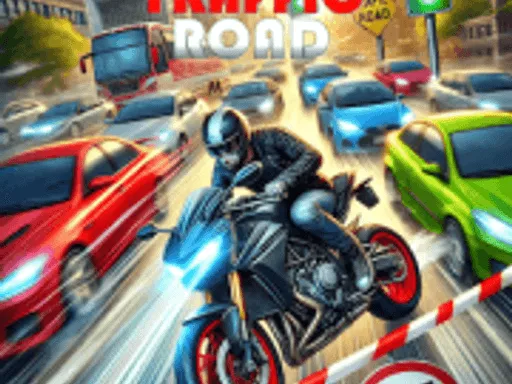
Traffic Road Focus Training: Build Faster Reactions and Safer Lanes
Traffic Road looks simple at first, but it rewards focus more than speed. If your eyes drift, your run ends fast. This guide shows how to train focus and reaction time for Traffic Road with clear drills and a short plan you can repeat. You can practice everything here on TrafficRoad.net, so it is easy to start today.
This article keeps a Grade 9 reading level. It uses short steps, simple words, and real examples. It also pulls a few facts from official road safety sources so you can see why focus and spacing matter in this game and in real life.
What Traffic Road is really testing
Many players think Traffic Road is only about fast taps. That is only half the story. The game tests three quiet skills that decide your score:
- Seeing patterns early
- Choosing a lane before it closes
- Controlling speed so you have time
The game gives the same types of lane patterns over and over. If you learn to read them, the game feels slower. When you react late, it feels unfair. The goal is to move from late reaction to early decision.
Two core habits that carry every Traffic Road run
Habit 1: Look farther ahead
When you stare at the car closest to you, you miss the next gap. Official driver manuals teach drivers to look far ahead on the road, not just at the car in front. For example, the Pennsylvania Driver's Manual says to scan 12 to 15 seconds ahead to spot hazards early. In Traffic Road, that idea means watching two or three cars ahead, not one.
A simple Traffic Road rule: your eyes should be ahead of your bike, not on it. You still check the near lane, but only for timing. The real decision is made by the open space ahead.
Habit 2: Keep a safety buffer
Real drivers are taught to leave space so they can react. The Rhode Island driver manual describes the three-second following rule to keep enough space to stop or move. Traffic Road is a game, but the same spacing habit works here. If you stay too close to the car ahead, your choice window shrinks. If you stay one beat back, you buy time.
In this game, a buffer is not slow. It is smart. It lets you pick the best lane instead of the first lane.
Why focus matters: a quick reality check
Traffic Road is a game, but focus rules are real. The National Highway Traffic Safety Administration reports that distracted driving caused 3,275 deaths in 2023. The same agency also notes that taking your eyes off the road for about five seconds at 55 mph is like traveling the length of a football field blind. Those facts are about real roads, but the lesson matches Traffic Road: one short focus break can end the run.
So when you train for Traffic Road, think like a focused driver. Look ahead. Keep space. Act early.
The five-step Traffic Road focus loop
Use this loop on every Traffic Road run. It is simple enough to repeat under pressure.
- Scan ahead. Find the open window two or three cars ahead.
- Pick a lane. Choose the lane that stays open the longest.
- Set speed. Tap to adjust speed before the gap closes.
- Commit clean. Make one clean lane change, then settle.
- Reset eyes. Move your eyes forward again and repeat.
This loop turns reaction into routine. Here, routines beat panic.
Reaction time vs decision time in Traffic Road
Many players try to train fast hands, but Traffic Road is more about fast decisions. Your hands can only react after your eyes see a clear option. That is why the focus loop starts with scanning.
Think of Traffic Road this way:
- Slow decision = late move. Late moves cause swerves and crashes.
- Fast decision = early move. Early moves feel smooth and safe.
You improve reaction time by improving decision time. When you know where the next gap is, your hands react quickly without stress.
Three drills to build Traffic Road focus
Each drill is short. You can stack them in 10 to 15 minutes.
Drill 1: Two-lane vision (3 minutes)
Goal: keep your eyes two lanes ahead at all times in Traffic Road.
How:
- Start a run and hold a steady speed.
- Say the next two open lanes out loud.
- Only move when the lane you named stays open.
This forces early scanning. Traffic Road feels calmer when you name the next lane early.
Drill 2: One-tap steering (4 minutes)
Goal: make clean, single lane changes in Traffic Road.
How:
- Start a run at medium speed.
- Move only one lane at a time.
- After each move, pause for half a second.
This drill teaches control. You stop over-steering and start gliding.
Drill 3: Buffer control (4 minutes)
Goal: keep a clear buffer in front of you in Traffic Road.
How:
- Choose a lane and keep a small gap from the car ahead.
- If the gap shrinks, slow for one beat.
- If the gap opens, return to steady speed.
This builds patience. Patience is a hidden power in this game.
A 14-day Traffic Road training plan
Use this plan to build focus and reaction without burnout. Each day is 10 to 20 minutes.
Days 1-3: Clean control
Focus: smooth lanes, no panic.
- Day 1: Drill 1 + Drill 2.
- Day 2: Drill 2 + buffer control.
- Day 3: Full focus loop for three runs.
Days 4-7: Fast decisions
Focus: early choices at higher speed.
- Day 4: Two-lane vision at higher speed.
- Day 5: Three runs using the focus loop only.
- Day 6: One run with no close passes at all.
- Day 7: Test run for a new best score.
Days 8-10: Risk control
Focus: take risk only when the exit is clear.
- Day 8: Practice exit first passes.
- Day 9: One-tap steering at high speed.
- Day 10: Choose space over speed for three runs.
Days 11-14: Consistency
Focus: keep mistakes low over many runs.
- Day 11: Five short runs, rate each crash reason.
- Day 12: Repeat your weakest drill.
- Day 13: Mix all three drills.
- Day 14: Final test run and review.
By day 14, your Traffic Road runs should feel calmer and longer.
Speed control that keeps Traffic Road fair
Speed is not the enemy in Traffic Road. Bad timing is. Use these simple speed habits:
- Speed up only when you can see the next gap.
- Slow down one beat before a tight window.
- Never speed up during a lane change.
When you apply these rules, Traffic Road feels predictable. You control the pace instead of the pace controlling you.
Common Traffic Road mistakes and quick fixes
Mistake 1: Staring at the closest car
Fix: look two cars ahead and name the open lane early.
Mistake 2: Double-swerving
Fix: one lane change, then settle. Use a second change only if you must.
Mistake 3: Over-speeding into a wall
Fix: slow before the wall, not inside it.
Mistake 4: No backup lane
Fix: always know your second choice lane before you move.
These fixes are small, but they save long runs in Traffic Road.
Device and setup tips for Traffic Road
If your inputs feel late, your focus drills will not help much. Clean setup matters.
- Close heavy tabs that steal resources.
- Use full screen so lanes are easier to read.
- Keep audio on low so you notice speed cues.
- Use a keyboard with consistent keys.
- Take short breaks so your eyes stay sharp.
Traffic Road rewards clean input. If the game feels laggy, fix the setup first.
Real-road lessons that map to Traffic Road
These points are about real driving, not the game. But they explain why Traffic Road habits work.
- The Pennsylvania Driver's Manual advises scanning 12 to 15 seconds ahead to spot trouble early. That is the same as reading the next two or three gaps in Traffic Road.
- The Rhode Island driver manual explains the three-second rule for following distance. In Traffic Road, that rule becomes a buffer that gives you time.
- NHTSA reports 3,275 deaths in 2023 from distracted driving. The same source warns that a five-second glance at 55 mph covers a football-field length. Traffic Road runs end the same way when your eyes drift.
Use these real-world ideas to build stronger Traffic Road focus and spacing.
Quick FAQ
Is Traffic Road just a reflex game?
No. Traffic Road is a decision game. Reflexes help, but smart choices matter more.
How long should I practice?
Ten to twenty focused minutes of Traffic Road is enough. Short, focused sessions beat long, tired sessions.
Should I chase risky passes to get a high score?
Only take a close pass in Traffic Road when you can see the exit lane. If the exit is hidden, wait.
Where is the best place to play?
You can play Traffic Road fast and free at TrafficRoad.net. It loads quickly and is easy to revisit for daily practice.
Final thoughts on Traffic Road focus training
Traffic Road becomes easier when you look ahead, keep space, and make early choices. Use the focus loop, train with the drills, and follow the 14-day plan. You will feel your runs slow down even as your score climbs.
When you are ready for your next practice, open TrafficRoad.net, start Traffic Road, and commit to one clean habit. One habit can change the whole run.